
The Designer’s Guide to Earthy, Organic Minimalism
The interior design trend that blends clean lines with warm textures and curved forms


As a homeowner, you likely crave the clean, uncluttered look of minimalism. It’s calming, organized, and sophisticated. But for many beginners, attempting this style leads to a common frustrating result: a room that feels cold, stark, and uninviting.
If your living space feels more like a clinical waiting room than a restorative sanctuary, you haven't failed at minimalism. You just need the right elements to warm it up.
Welcome to the designer's secret weapon: Earthy, Organic Minimalism.
This aesthetic isn't about having less; it's about having the right combination of form and texture. It is a style grounded in nature, prioritizing tactile materials and soft silhouettes over rigid lines and glossy surfaces.
Here is our expert guide on how to style your home using the principles of Earthy Organic Minimalism, featuring key pieces from our new collection.

Tip 1: Use Tactile Textures to Replace Bright Colors
A common mistake beginners make when trying to warm up a room is adding too many bright colors. True Earthy Organic Minimalism sticks to a strict, warm neutral palette (creams, beiges, warm browns) and lets texture do the heavy lifting.
When you remove bright colors, your eye notices material quality much more. If everything is smooth and flat, the room falls flat.

To create a high-end, cozy feel, you must layer natural materials that beg to be touched.
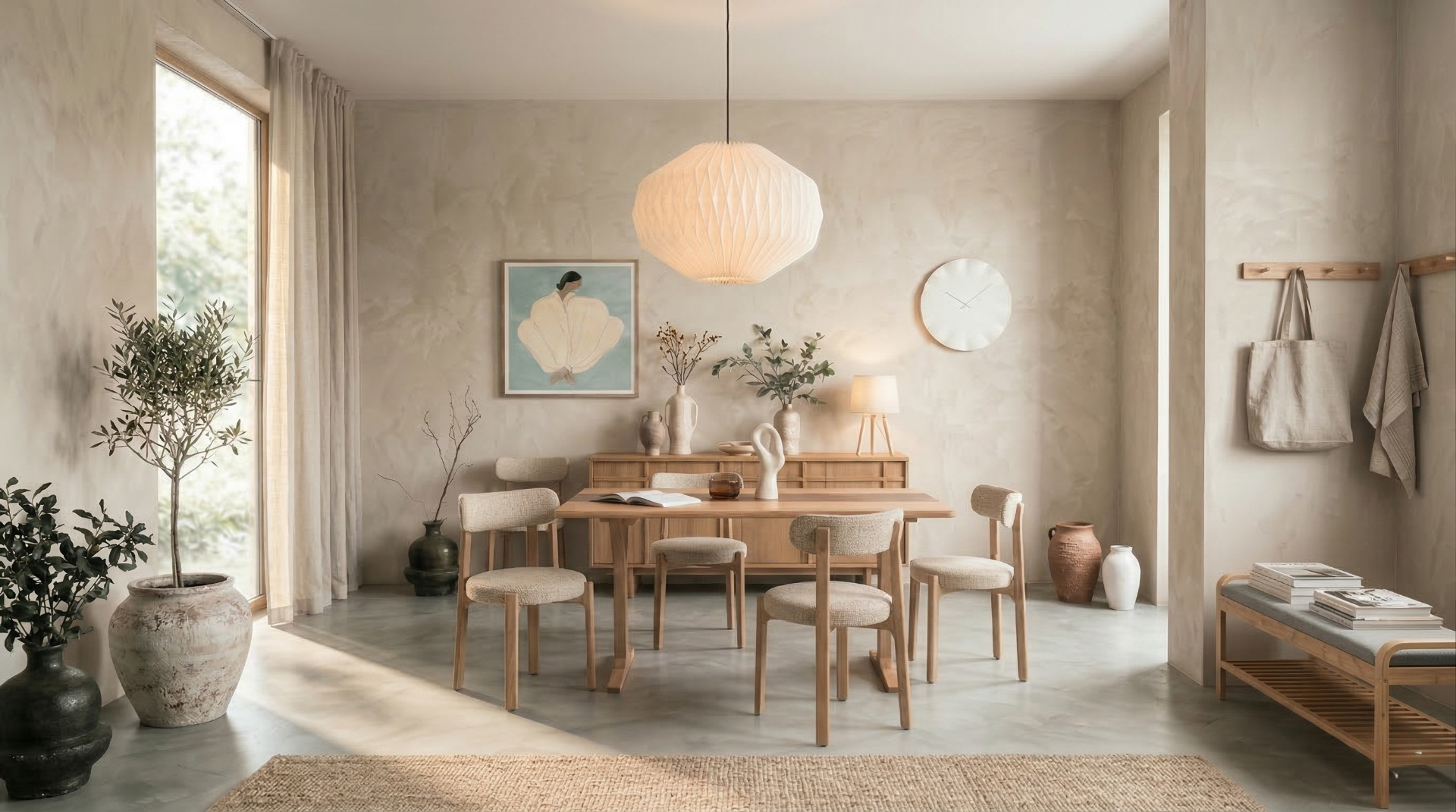
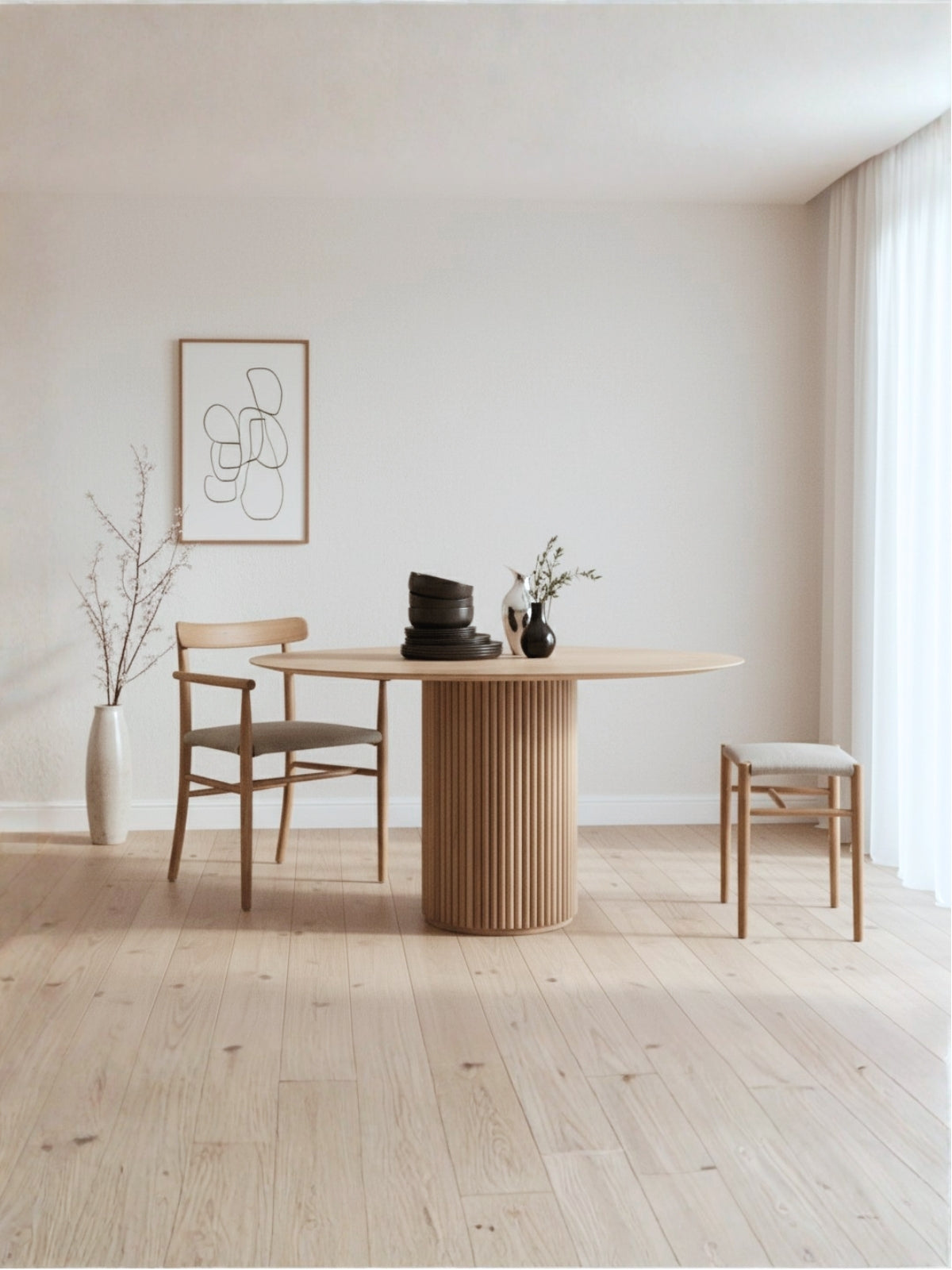
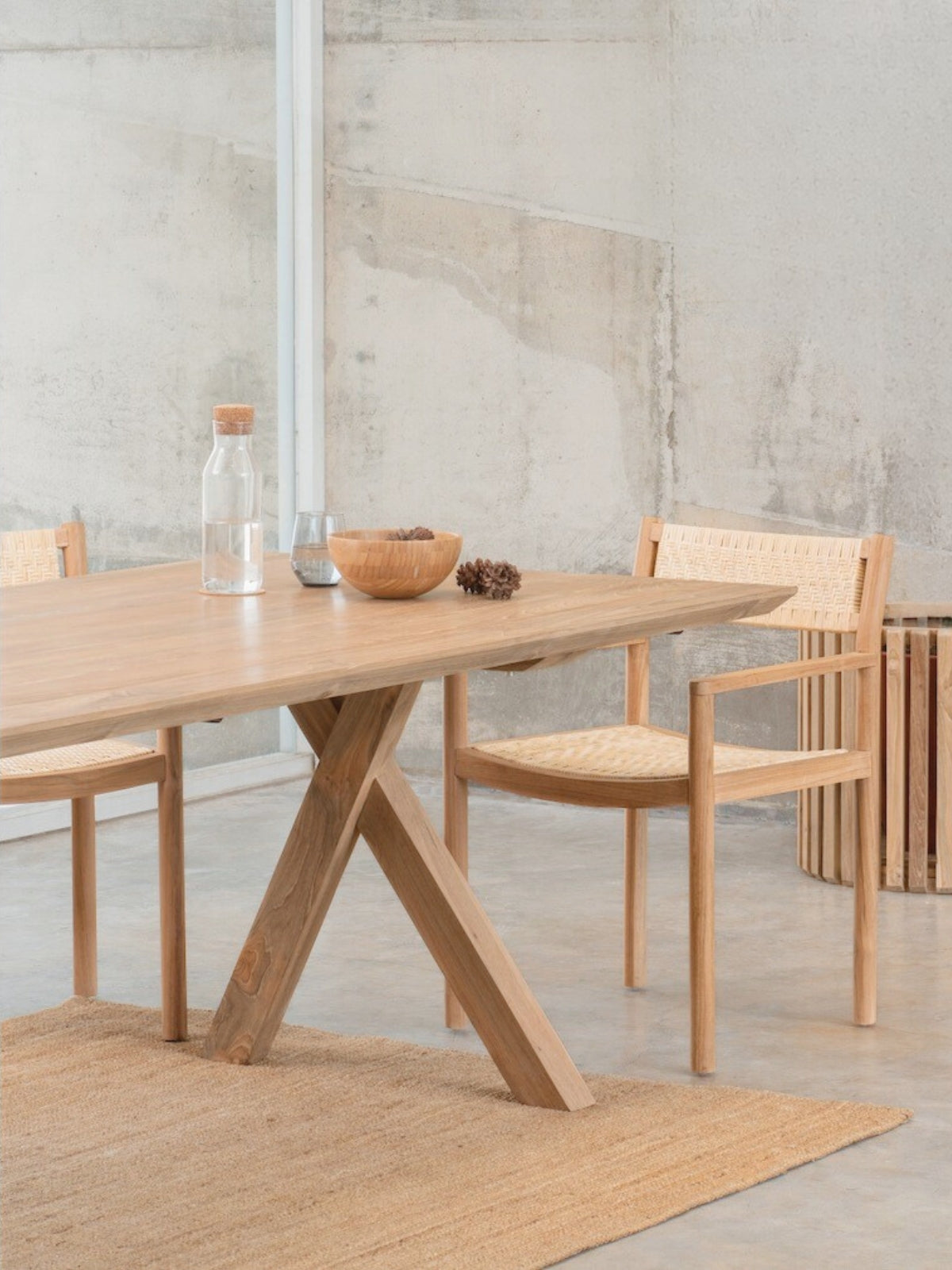
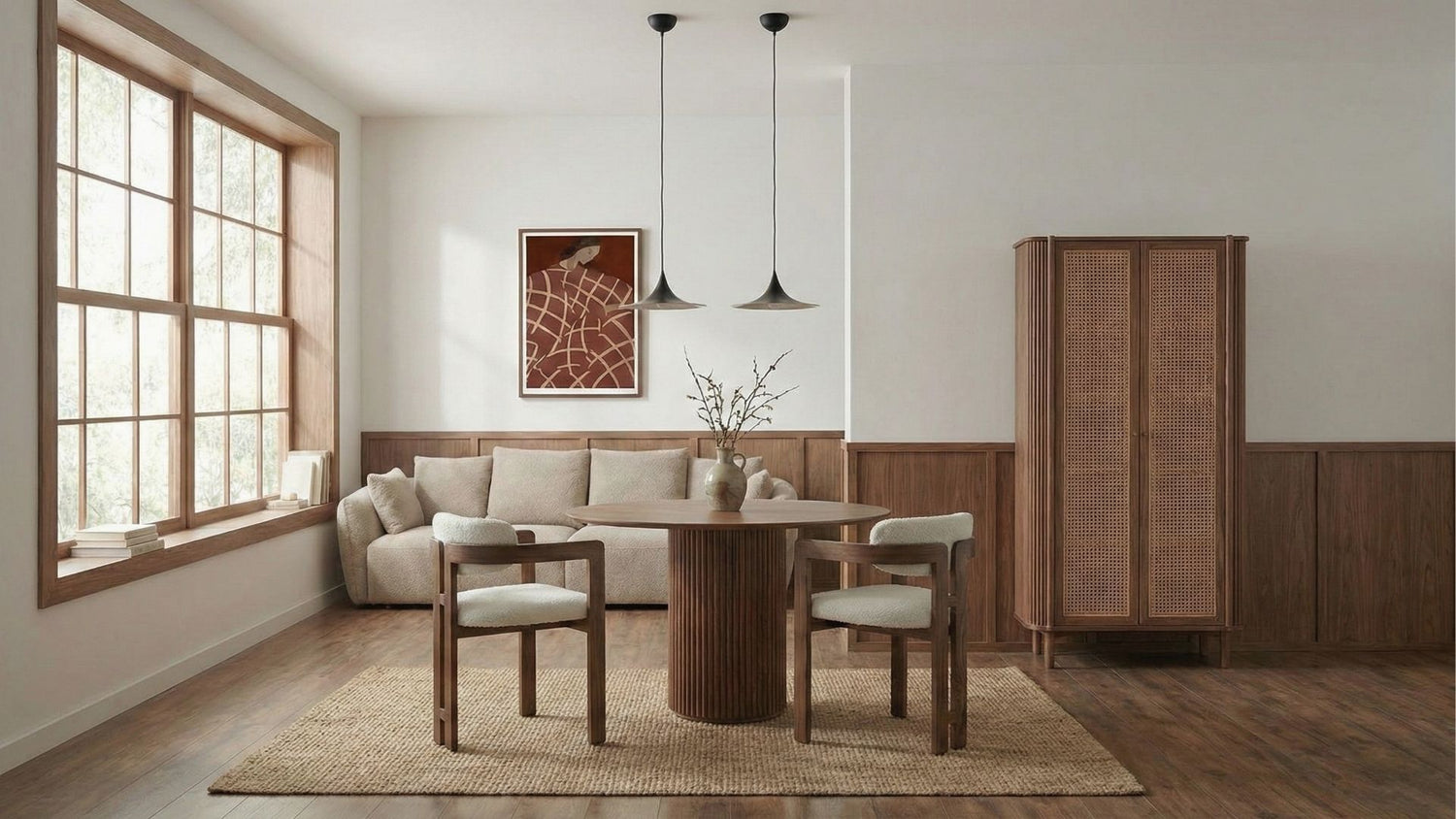
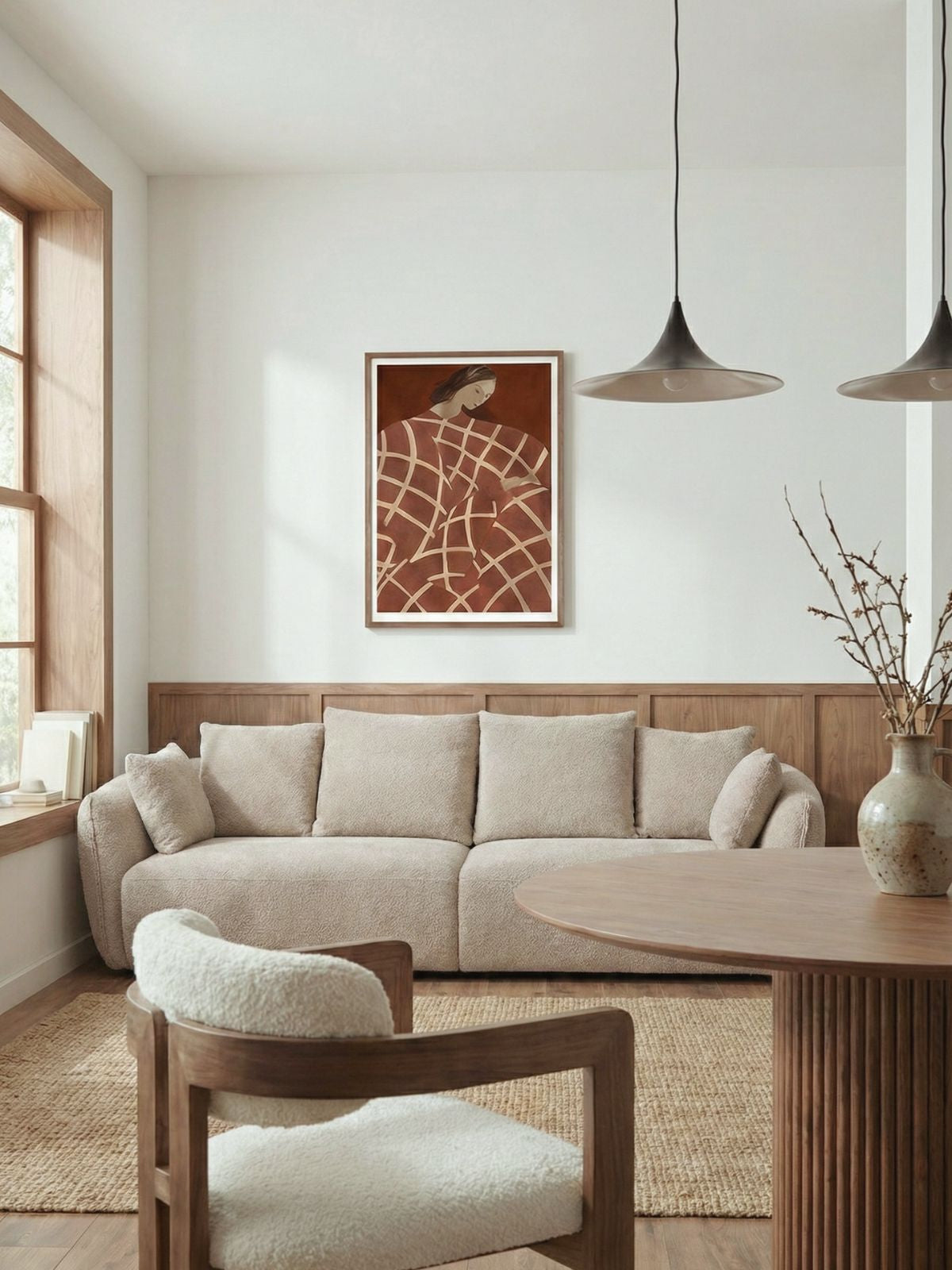
- Natural Wood Grain: Forget lacquered, shiny finishes. We utilize natural ash and rich natural wood grains that show the life of the material. The warmth of the wood wainscoting and the fluted dining table grounds the airy space.
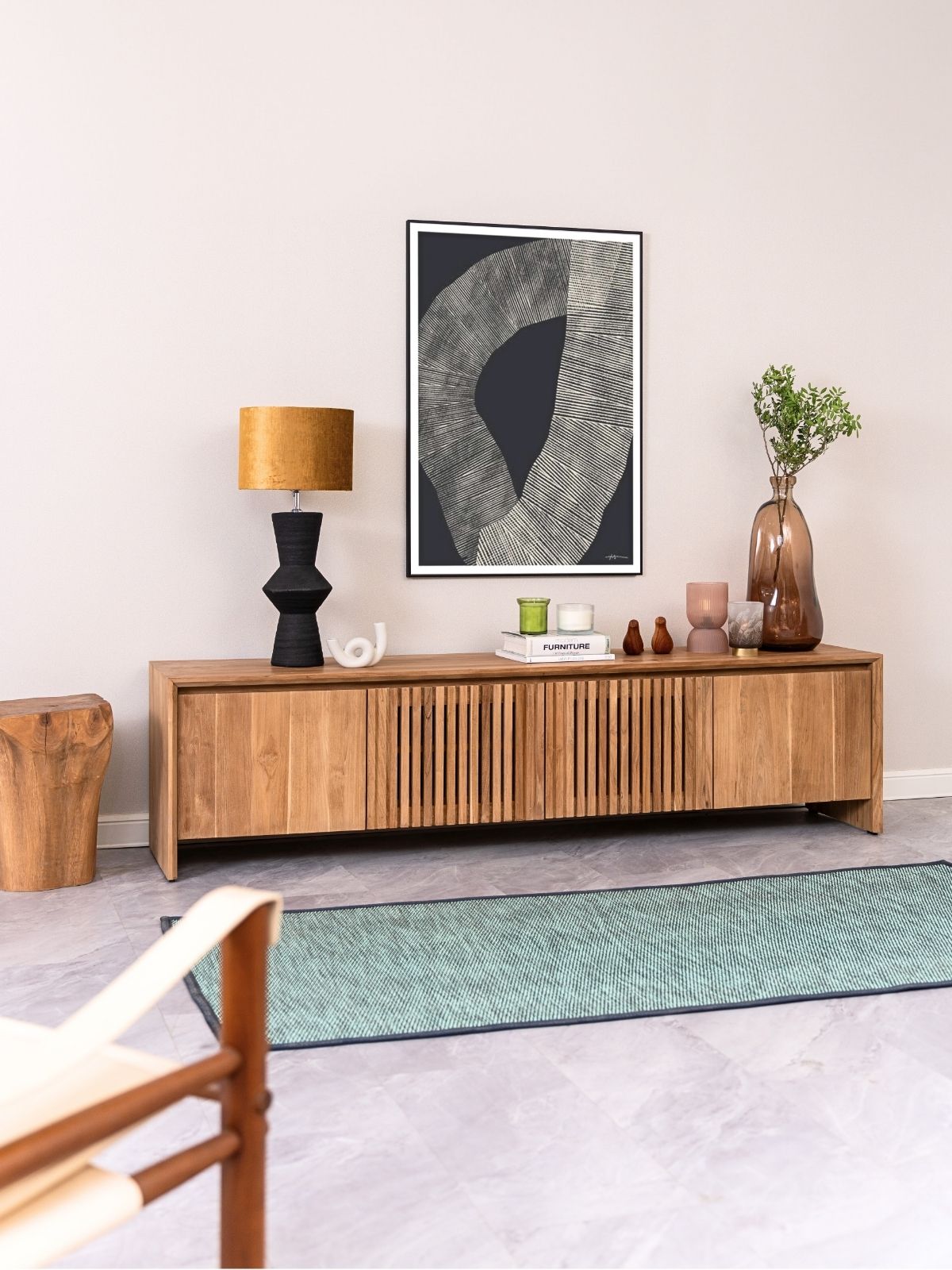
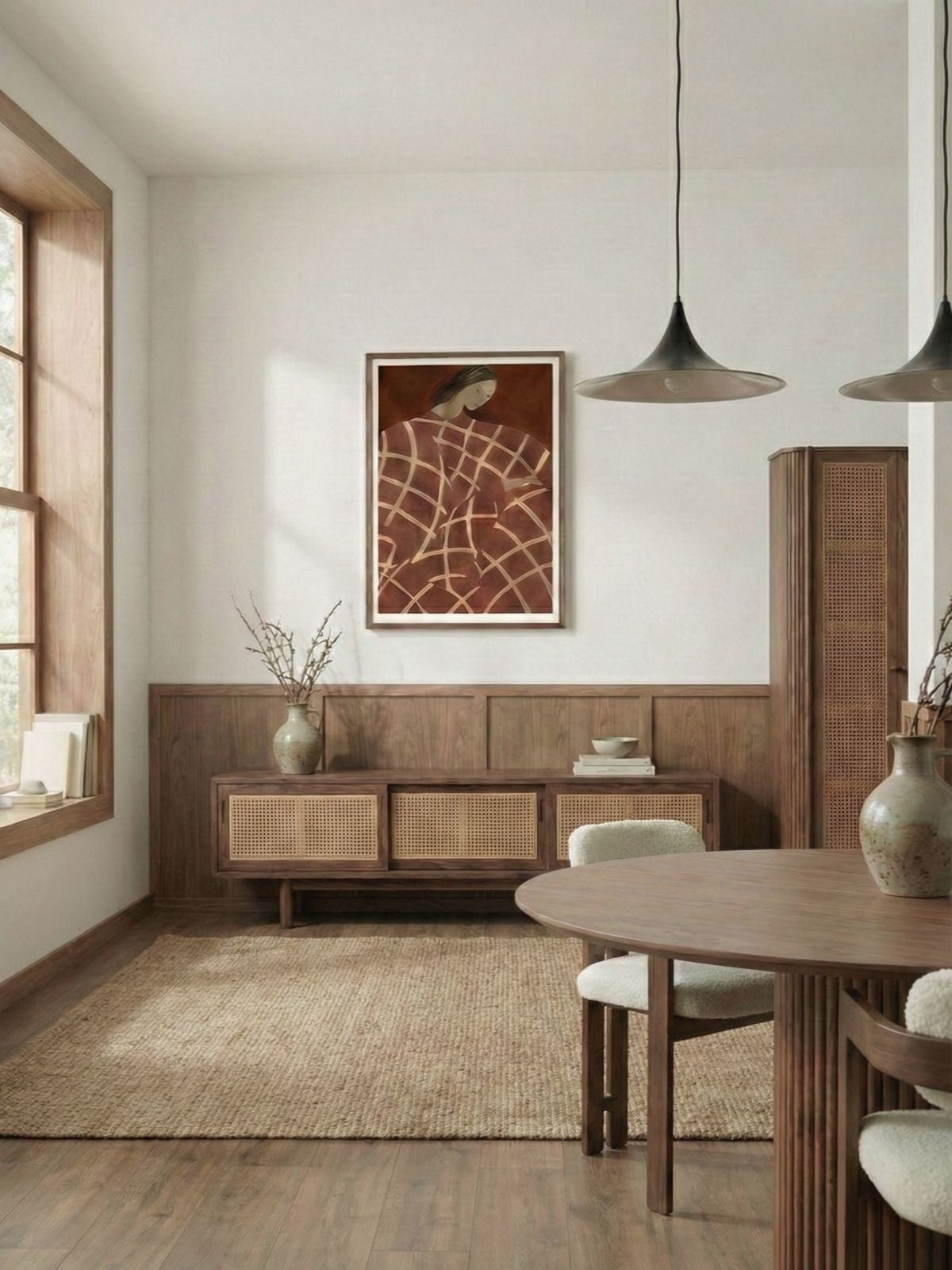
- The Intricate Weave: Our media consoles and tall cabinets feature woven cane/rattan doors. This adds a crucial layer of intricate, natural detail that breaks up solid blocks of wood, adding an airy, relaxed feel.
- Tactile Fabrics: A smooth fabric sofa here would feel too cold. Instead, a nubby, textured off-white boucle fabric absorbs light and looks incredibly soft, instantly raising the cozy factor.
Tip 2: Anchor the Space with Earth-Toned Minimalist Art
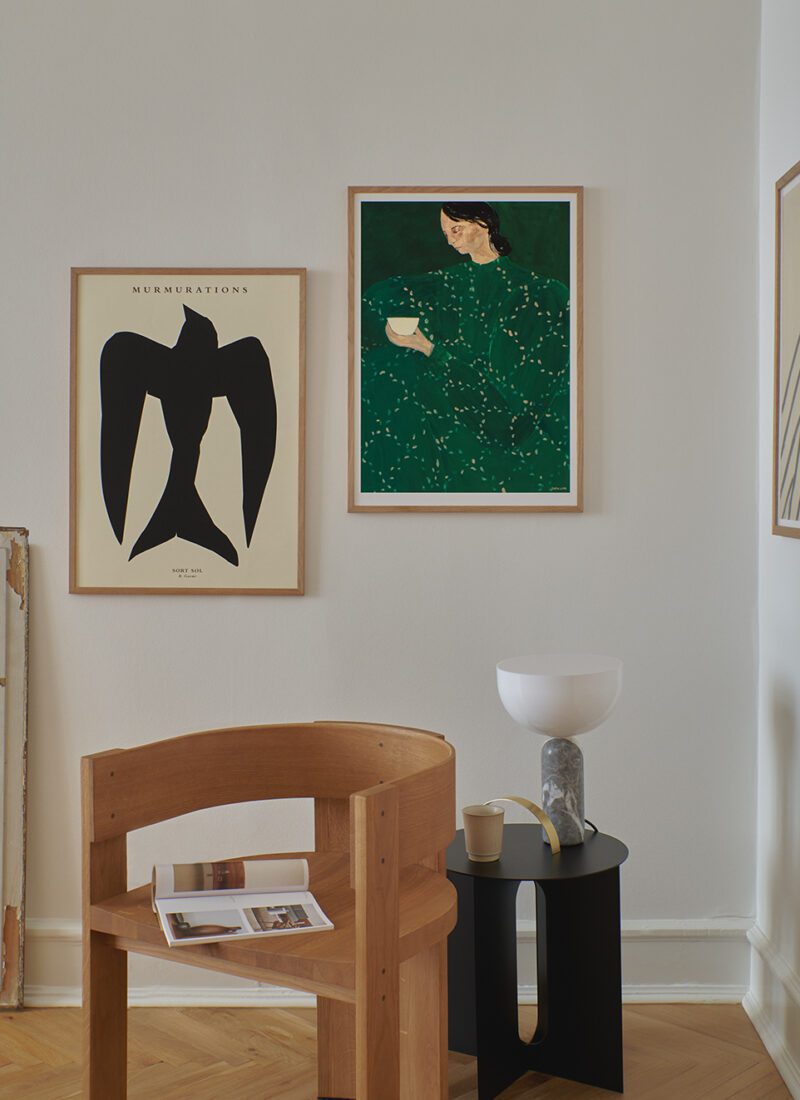
In a minimalist space, walls can often feel too empty. However, cluttering them with a gallery wall defeats the purpose of the style.
The solution is one large, impactful piece of art that serves as the room's emotional anchor.
The art print is where we introduce our only significant "color"—but it must be an earthy color. The deep rust and warm terracotta tones in the geometric print shown above connect beautifully with the walnut wood tones. It draws the eye upward, adding personality and warmth without creating visual chaos.

Tip 3: Soften the Room with Curved Sofas and Round Dining Tables
For decades, modern design has been dominated by the rectangle—sharp corners on sofas, square coffee tables, and boxy cabinetry. While clean, these shapes can subconsciously make a room feel rigid and tense.
The quickest way to make a minimalist room feel cozy is to soften the architecture with curves.
Our NOIR CURVE collection was designed specifically to solve this problem. Notice how the rounded arms and back of the boucle sofa immediately make it look plush and inviting rather than stiff.
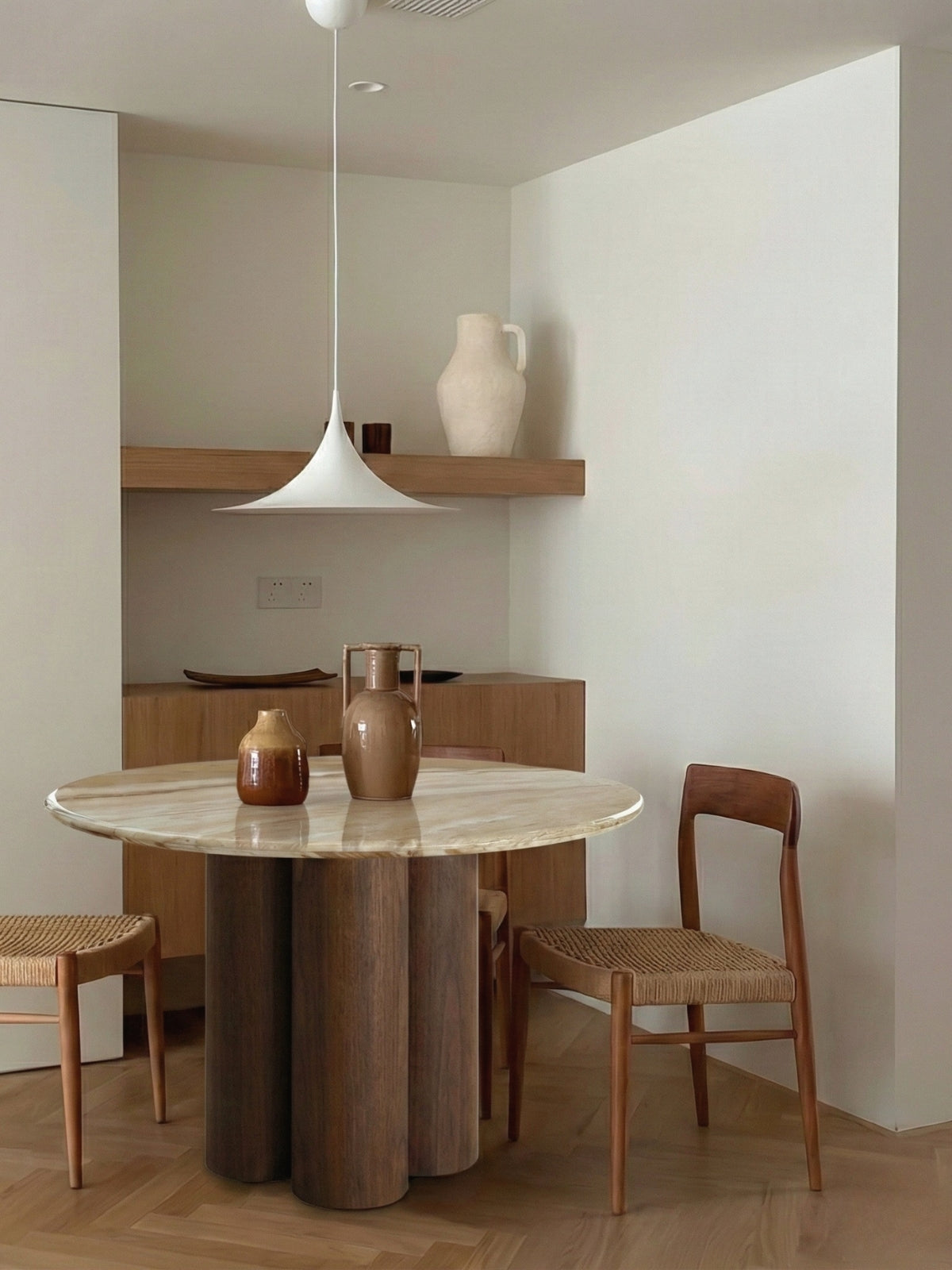
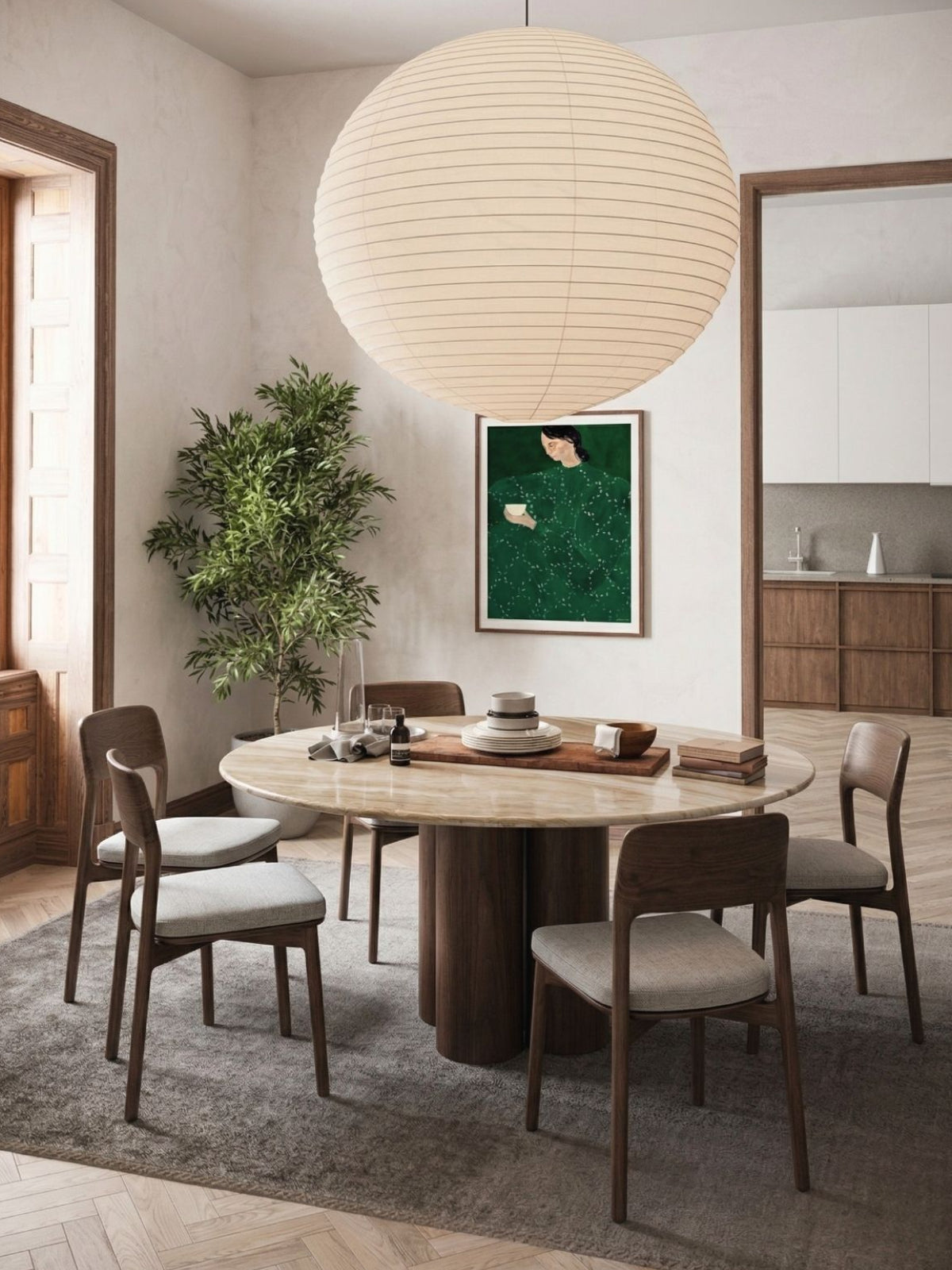
In the dining area, swapping a rectangular table for a round one—especially one with a beautiful fluted cylindrical base—improves the room's "flow." It allows the eye to move easily around the space, creating a gentler environment that encourages conversation.
Expert Tip: You don't need every piece to be round. The goal is balance. Pair the soft curves of our sofa and dining table with the structured lines of wall paneling or a window frame for a sophisticated contrast.
Shop the Look
Achieving a minimalist home that feels warm and welcoming doesn't have to be a challenge. By choosing pieces designed with organic curves and rich natural materials, you can create a sanctuary that looks curated by an expert.


DIANA 2.5 Seat Sofa

Waiting At Art Et Metiers

RIVO Rattan Tall Shelf

MARLOWE Dining Table

VALEN Armchair
The Step-by-Step Styling Guide
Ready to transform your space? Here is the designer's recipe for recreating this look in your own home using our collection.
1. Start with the Foundation
Lay down a large, natural jute or sisal rug. This immediately defines the zone and adds the first layer of rough, natural texture.
2. Place Your Major Curves
Position your curved boucle sofa as the main seating. If it's an open plan, use a round dining table to define the adjacent eating area.
3. Bring in the Warm Wood & Cane
Add storage with character. A long, low walnut credenza with cane doors works perfectly under a TV or behind the sofa. Use a tall matching cabinet to fill an empty corner and draw the eye up.
4. Add the Anchor Art
Hang a large-scale print with warm, earthy hues (rust, olive, ochre) centrally above your credenza or sofa.

Waiting At Art Et Metiers
MARLOWE Dining Table
VALEN Armchair

RIVO RATTAN TV Cabinet

Explore our range of natural wood and rattan furniture to begin your home transformation.
Explore our range of natural wood and rattan furniture to begin your home transformation.
Author's name

Explore our range of natural wood and rattan furniture to begin your home transformation.
Explore our range of natural wood and rattan furniture to begin your home transformation.
Author's name


Explore our range of natural wood and rattan furniture to begin your home transformation.
Explore our range of natural wood and rattan furniture to begin your home transformation.
Author's name


Explore our range of natural wood and rattan furniture to begin your home transformation.
Explore our range of natural wood and rattan furniture to begin your home transformation.
Author's name

Explore our range of natural wood and rattan furniture to begin your home transformation.
Explore our range of natural wood and rattan furniture to begin your home transformation.
Author's name

Explore our range of natural wood and rattan furniture to begin your home transformation.
Explore our range of natural wood and rattan furniture to begin your home transformation.
Author's name


Explore our range of natural wood and rattan furniture to begin your home transformation.
Explore our range of natural wood and rattan furniture to begin your home transformation.
Author's name


Shop by the same style





Frequently Asked Questions: Mastering the Organic Minimalist Look
Q: What is the difference between regular minimalism and "Earthy Organic Minimalism"?
Q: What is the difference between regular minimalism and "Earthy Organic Minimalism"?
A: Traditional minimalism often relies on cool tones, sharp lines, and man-made materials like chrome or lacquer, which can sometimes feel stark or clinical. Earthy Organic Minimalism keeps the clutter-free ethos but replaces those cold elements with warm, natural materials—like walnut wood, rattan, and wool—and soft, curved furniture shapes to create a space that feels restorative and cozy.
Q: My living room feels boring and flat. What am I doing wrong?
Q: My living room feels boring and flat. What am I doing wrong?
A: You are likely missing texture. When you have a neutral color palette, texture becomes the most important element. If everything is smooth, your eye has nothing to interest it. Swap out flat surfaces for pieces that invite touch: a nubby boucle armchair, a media console with woven cane doors, or a rough sisal rug. These layers add depth and interest without adding clutter.
Q: Why should I choose curved furniture over straight lines?
Q: Why should I choose curved furniture over straight lines?
A: Most rooms are boxes built with right angles. Filling them with more square furniture can make the space feel rigid and tense. Introducing organic curves—like a round dining table or a sofa with rounded arms—softens the room's architecture, improves traffic flow, and subconsciously makes the environment feel gentler and more relaxing.
Q: What colors should I use for an earthy minimalist room?
Q: What colors should I use for an earthy minimalist room?
A: Stick to a strict, warm neutral palette as your base: creamy whites, oatmeal beiges, and warm grays. Your primary "color" should come from rich wood tones like natural ash or walnut. If you want to add an accent color, choose a grounding earth tone like terracotta, rust, deep olive, or ochre, best introduced through a large piece of statement art.
Q: Is wood furniture okay in a minimalist room?
Q: Is wood furniture okay in a minimalist room?
A: Absolutely. In fact, it's essential for warmth. The key is the finish. Avoid high-gloss, lacquered finishes that look plastic. Instead, choose furniture with a matte or satin finish that showcases the natural wood grain. The organic patterns of the grain provide visual interest that is both minimalist and warm.